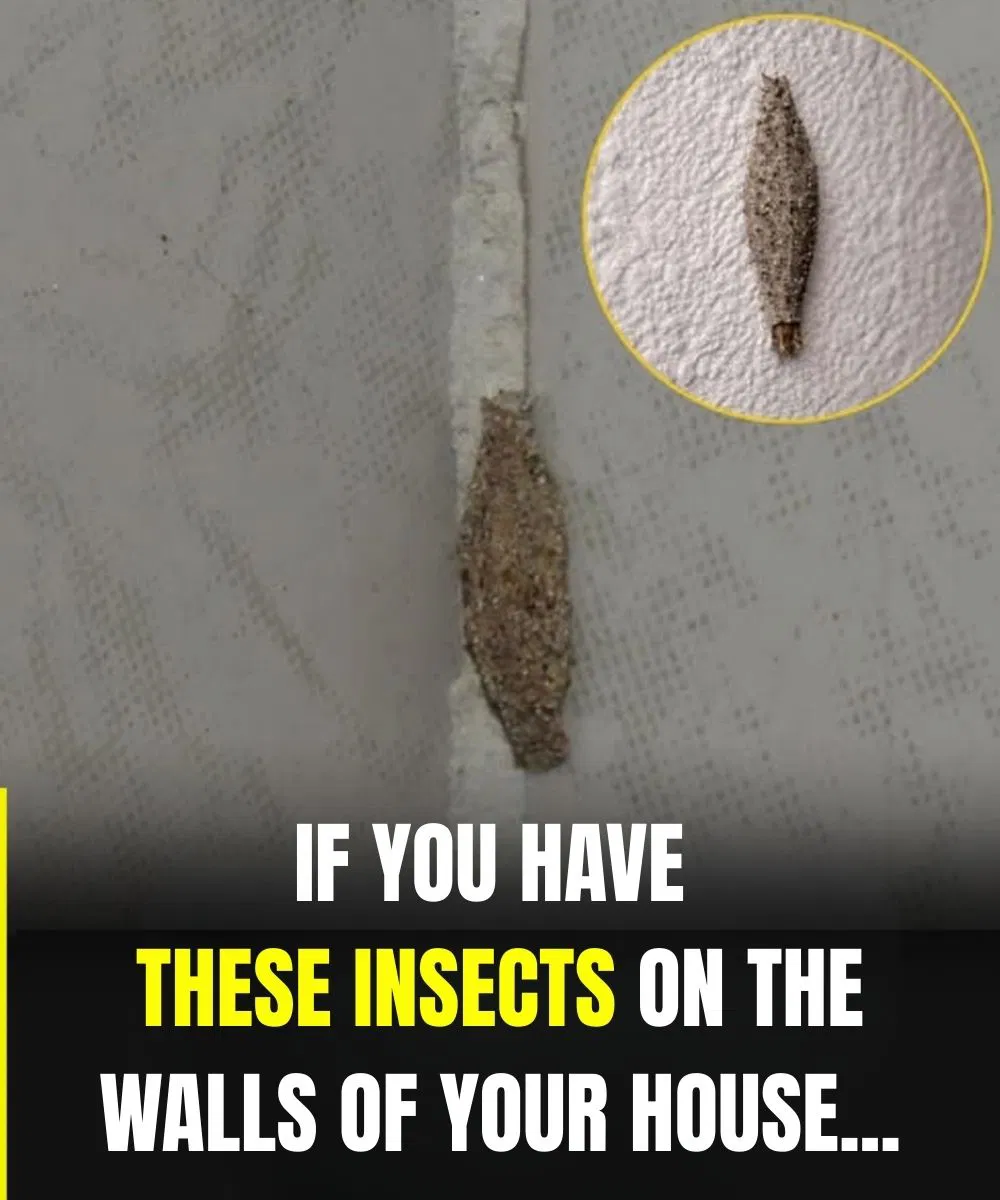
Bagworms, also known as case-bearing moth larvae, are small insects that often go unnoticed because of their unique ability to camouflage themselves. They carry a tiny “case” made from dust, fibers, and debris, which allows them to blend seamlessly into indoor environments. While bagworms are not dangerous to humans, their presence can be unsettling and may indicate issues related to cleanliness, humidity, or ventilation. Understanding where they tend to hide is the first step toward effective prevention and control.
1. Walls and Corners Near the Ceiling
One of the most common places bagworms hide is along walls, especially near ceiling corners. These areas are rarely disturbed during regular cleaning and often collect fine dust and cobwebs—ideal materials for bagworms to build their protective cases. They may appear as tiny, grayish, tube-shaped objects clinging to the wall and are often mistaken for lint or debris.
